This post may contain affiliate links. Please read my terms & conditions for more info.
Over the years we have grown a variety of different fruits and vegetables. Some have been easy and others have failed spectacularly.
Today I thought I would share 10 easy to grow fruits and vegetables, perfect for the beginner gardener or growing with kids. Please note though I’m not a professional gardener. The following is our experience of growing. I have included brief descriptions of how to plant and care for the plants.
For more detailed information check out websites such as the Royal Horticultural Society. (Not a sponsored link just a handy website).
10 Easy To Grow Fruit & Vegetables
1. Salad
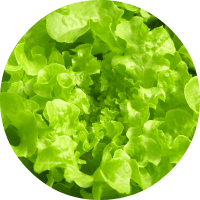
I’ve put salad first as for me it’s the easiest thing I have ever grown. You can either grow it from seed or buy salad seedlings. I buy them as seedlings as I don’t have anywhere suitable to grow them from seed.
How To Grow: You plant the seedlings in a large pot or *GroBox and let them grow! You will need to water them if it’s dry but that is it.
When to Plant: Salad is best planted in the cooler months. Spring or Autumn are best.
2. Potatoes
Potatoes are another easy to grow option. There are lots of different varieties so it depends on what you like.
How To Grow: You will need to buy some seed potatoes. You’ll find them in every garden centre. You can either buy earlies or main crops. Early potatoes can be harvested sooner than mains.
I bought a *reusable potato tub to plant mine. It has a flap at the bottom which you can open when your potatoes are ready. They need watering regularly.
When to Plant: Plant in March or April
3. Strawberries
Strawberries are great for beginners as once planted they look after themselves and regrow for at least 3 years.
Strawberries are happy to grow in most places. For a few years, we grew them in our *hanging baskets. This year I have put them into large pots.
It’s worth noting that if you plant them into the ground they will spread! Once they are grown you may need to put something down to protect the strawberries from the soil. If they lay on the soil they will rot. We use a thin layer of gravel to prevent this happening.
When to Plant:
Strawberries are best planted in late Spring or early Summer. They fruit around 60 days after planting.
4. Mint
Mint is a very hardy plant and takes care of itself. It also regrows every year so you don’t need to replant.
How to Grow:
Mint can either be planted in pots or straight into the ground. Although if you plant it into the ground it will spread everywhere! We always plant ours in pots.
You can grow it indoors although I’ve never had much luck with that. I always forget to water them!
When the mint has finished flowering you will need to cut the stems back so that it regrows the following year.
When to Plant:
It’s easiest to plant a young plant in the Spring.
5. Tomatoes
Tomatoes are easy to grow if you provide them with the right environment. I have had varying degrees of success with them myself. In our old house, we had a greenhouse and an automatic watering system.
The tomatoes we grew there were amazing! The plants grew high and produced tonnes of tomatoes. In our current house, we don’t have the luxury of a greenhouse. I’ve never been able to grow tomatoes like those ones since.
I did purchase a pop-up greenhouse last year which I hoped might make a difference. I did get some tomatoes but nowhere near the amount I had before. I’ve since decided that I’m not a great fan of pop up greenhouses as they break very easily.
How to Grow: Tomatoes can be grown in *reusable grow bagsor large pots. You will need canes to help support the stalks as they get quite heavy. You might also want to buy some
You can grow them from seed or seedlings.
When to Plant: If you are growing from seed plant in March or April. If you are growing from a seedling it’s best to leave it to later on in the Spring when all the frost has passed.
6. Onions
Last year we grew onions at our allotment. Once planted we left them alone and they grew well. They do need regular water, though.
How to Grow:
Onions are best grown in the ground as they need a fair bit of space between each bulb. You can grow them either from seed or small bulbs.
We grew them from bulbs. You need to dig small trenches in a row in the ground. Then put the bulbs in with a gap of around 10cm between each bulb. Leave a 30cm gap between each row.
When to Plant:
Plant in either the Spring or Autumn.
7. Courgettes
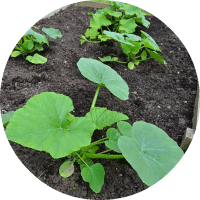
Courgettes can be grown in large pots, grow bags or in the ground, like tomatoes. You will need canes to support the stems. Each plant can produce lots of courgettes. The yellow leaves that the plant produces are also edible. They look great in salads.
My sister in law grew some fantastic courgettes last year in grow bags in her pop-up greenhouse.
How to Grow:
Courgette seeds can be sewn into the soil or you can grow from seedlings.
When to Plant: Courgettes are best planted in May.
8. Rhubarb
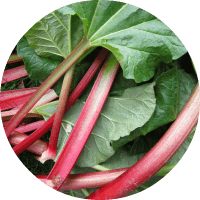
We grew our rhubarb in pop-up pots. I planted the seedling and let it grow. The one I planted last year has also started regrowing this year without me doing anything to it!
How to Grow:
Rhubarb can be grown from seed but it’s easier to plant dormant crowns. You can grow it in the ground or in pots.
When to Plant:
Rhubarb is best planted in early Spring.
9. Green Beans
We have only grown green beans twice on our allotment but they were very easy to grow. It’s best to construct a frame over them so they can climb and grow. (See picture).
The kids loved going to the allotment and picking the beans. They’d sit there and much their way through half of them before we could get them home!
How to Grow:
There are lots of different types of green beans. We have grown broad beans and french beans. If you get a frost you will need to cover the beans with a fleece blanket to protect them.
When to Plant: Green beans are best planted out in June.
10. Pumpkins
Pumpkins are a fun vegetable to grow with kiddies. They are easy to grow and can get very big!
How to Grow:
Pumpkins can be started off in pots or in a greenhouse. They will then need to be planted in the ground with enough space between each plant. Once harvested you can make lots of great foods like pumpkin soup or pumpkin pie. You can even roast the seeds to make a tasty snack.
Gina is a content creator and award-winning blogger. Her aim is to help you live a more sustainable & simple life. Her blog covers zero waste, minimalism, wellbeing & thrift. She currently lives in Cornwall with her partner, two kids and Charles the dog.
This website uses cookies to improve your experience. We'll assume you're ok with this, but you can opt-out if you wish.AcceptRead More
Privacy & Cookies Policy
Privacy Overview
This website uses cookies to improve your experience while you navigate through the website. Out of these, the cookies that are categorized as necessary are stored on your browser as they are essential for the working of basic functionalities of the website. We also use third-party cookies that help us analyze and understand how you use this website. These cookies will be stored in your browser only with your consent. You also have the option to opt-out of these cookies. But opting out of some of these cookies may affect your browsing experience.
Necessary cookies are absolutely essential for the website to function properly. This category only includes cookies that ensures basic functionalities and security features of the website. These cookies do not store any personal information.
Any cookies that may not be particularly necessary for the website to function and is used specifically to collect user personal data via analytics, ads, other embedded contents are termed as non-necessary cookies. It is mandatory to procure user consent prior to running these cookies on your website.