This post may contain affiliate links. Please read my terms & conditions for more info.
In recent years, the consumption of plant-based milks has soared to unprecedented heights, as an increasing number of individuals embrace a healthier and more environmentally conscious lifestyle. In fact in the last two years in the UK non-dairy milk sales have grown by a whopping 155% and according to Ipsos 48% of Brits now use plant-based milks. As a result, the market has seen a remarkable surge in innovative plant-based alternatives that cater to a wide array of dietary preferences and nutritional needs. With such an abundant selection, it can be challenging to determine which plant-based milk is truly the cream of the crop.
For this article, I’ve taken a deep dive into the best plant-based milks available today. Whether you follow a vegan diet, are lactose intolerant, or simply want to reduce your environmental impact, there is a plant-based milk out there for you.
I have created a comprehensive selection of plant-based milks derived from an assortment of nutrient-rich sources such as almonds, soybeans, oats, coconuts, and rice. For my research I focused on the ingredients in the milk and whether it contains any food additives, the cost, where the milk is made, the company behind the milk, environmental credentials & certifications and the packaging. All of the milks that made my top picks list do not contain gums.
As always, my two main driving factors when compiling my top picks lists are the environment and health. If you’re looking for recommendations of plant-based milk that taste great, but may cause harm to your health then this isn’t the roundup for you.
Before we jump into my top picks I’ve included a bit of information on the different types of plant-based milks, including what to look for and what to avoid.
The different types of plant-based milks
- Cereal based: oat, corn, rice, spelt
- Nut based: almond, cashew, coconut, hazelnut, macadamia, pistachio, walnut, tiger nut
- Legume based: soy, pea, peanut
- Seed based: flax, chia seed, sesame, hemp, sunflower
- Pseudo-cereal based: teff, quinoa, amaranth
- Vegetable based: potato
What to look for in a plant-based milk
In order to find a plant-based milk that is both good for the environment and your health you need to consider the following:
- Is the main ingredient environmentally friendly?
- How many ingredients? The less the better!
- Does it contain any food additives such as gellan gum, guar gum?
- Does it contain oil?
- Does it contain added sugars?
- How much sodium does it contain?
- Is the milk organic?
- What are the company’s ethical and environmental practices?
- What packaging does the milk come in?
- Is the milk made in the UK?
What to avoid in plant-based milks?
- Avoid milks that contain gums (see more on this in my FAQ’s below).
- Avoid genetically modified oils.
- Avoid almond milk that isn’t organic. The almond industry contains a lot of pesticides that are harmful to humans and wildlife. Make sure your almond milk is certified organic.
- Avoid soya milk from South America as soya production there is linked to deforestation.
- Avoid plastic bottles if possible as they have a higher carbon footprint compared to cartons.
My Top Picks
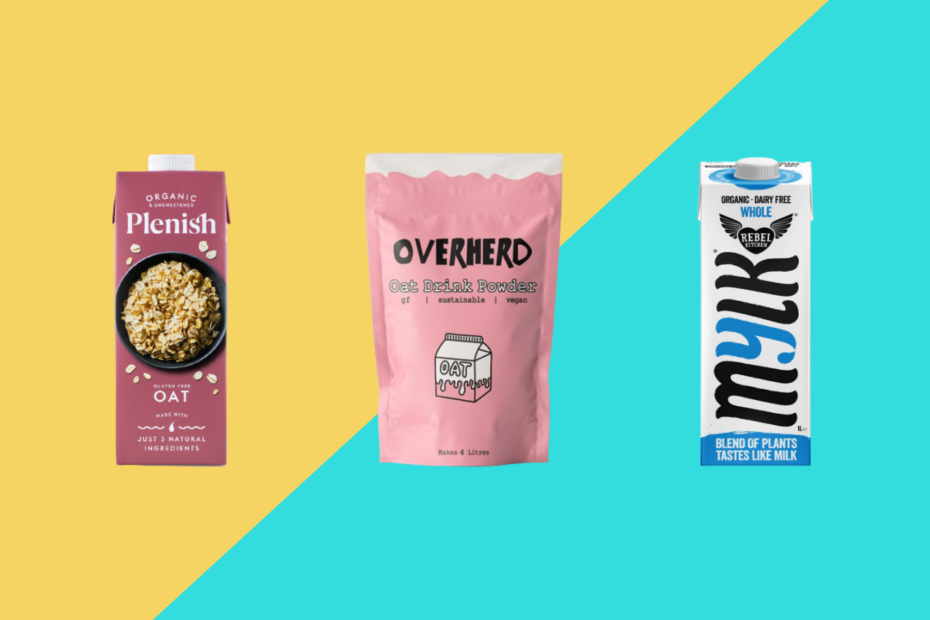
- Georgina’s Top Pick: Plenish *£15.20 at Amazon
- Best Powdered Oat Milk: Overherd *£10.99 at Overherd
- Best Carbon Neutral: Rebel Kitchen Dairy Free Organic Mylk *£22.00 at Amazon
- Best Eco-Friendly Packaging: ReRooted *£2.90 at Abel & Cole
- Best Soya: Plamil Soya Milk *£2.25 at Ethical Superstore
- Best Almond: Rude Health *£2.15 at Ethical Superstore
- Best Pea: Sproud Original Drink Unsweetened *£2.15 at Ethical Superstore
- Best Potato: Dug Unsweetened *£2.35 at Ethical Superstore
Reviews of The Best Plant-Based Milks
Georgina’s Top Pick: Plenish

Founded in 2012 by Kara, Plenish started with nutrient-rich, cold-pressed juices and then expanded into plant-based milks. Since then their cold-pressed juices, shots & plant-based milks are now sold in thousands of stores across the UK.
Plenish is the plant-based oat milk that I use myself. I chose this one over all of the others as it only contains 3 ingredients, none of which are hidden nasties, such as gums or oils. I try to prioritise my health when it comes to food and drink choices. It’s also a good price compared to other milks. I buy it in bulk through the Plenish website which saves me money. I also subscribed to monthly deliveries which saved me even more money. I’d highly recommend buying in bulk if you can as you will save money.
They make a whole range of different plant-based milks including oat, almond, cashew, hazelnut, soya and coconut. All of which are organic, oil & gum free.
Ingredients: the plant based-ingredient, water and pinch of salt
The Specs:
- Brand: Plenish
- Main ingredient: Oat
- Size: 1L
- Organic: Yes
- Sugar free: Yes
- Gluten free: Yes
- Certifications: Soil Association, certified B-Corp, Carbon Negative
- Packaging: Recyclable TetraPak carton
The Pros:
- Only has 3 ingredients
- No oils or gums
- No flavourings
- No preservatives
- No additives
- Palm oil free
The Cons:
- Contains salt (but minimal amount)
What Others are Saying:
It’s recommended by Bustle. Plenish scores 11 out of 20 by Ethical Consumer. It’s an Amazon’s Choice and has a 4.6 rating out of over 150 reviews.
Best Powdered Oat Milk: *Overherd

*Overherd, a UK-based company, was founded in January 2023 with a simple yet powerful idea: concentrate on oat milk’s essence. Recognising the environmental impact of transporting water-heavy oat milk, they developed a sustainable oat milk powder. Located in North Yorkshire, their small team prioritises sustainability and local production, crafting their product with care. Overherd’s story is one of passion, innovation, and a commitment to reducing environmental footprint while delivering delicious oat milk.
Powdered plant-based milk wasn’t on my radar until Overherd contacted me, and asked if I’d like to try their product. I must admit I was hesitant at first, as I didn’t feel it would taste very nice. I was very wrong! It’s one of the best tasting plant-based milks I’ve tried. I love the fact that switching to oat milk in powdered form reduces packaging, CO₂ emissions and food waste. The price is also very good, compared to some other leading brands. Since trying Overherd I will be switching to this milk from now on.
The cheapest way to buy this oat milk is on the Overherd website, and subscribe to regular deliveries. As an added bonus you’ll also get a free reusable glass bottle, and a recycled bamboo fibre scoop.
Ingredients: gluten free organic oats (68%), coconut MCT powder (modified starch), chicory root fibre, calcium carbonate, vitamin B12.
The Specs:
- Brand: Overherd
- Main ingredient: Organic oats
- Size: 4L & 8L
- Organic: Yes
- Sugar free: Yes
- Gluten free: Yes
- Certifications: Not yet
- Packaging: Recyclable plastic pouches
The Pros:
- Carbon neutral shipping
- 90% less packaging vs. cartons
- Very creamy
- Good price
- No preservatives
- No thickeners
- No emulsifiers
- No gums
The Cons:
- Plastic packaging (fully recyclable)
What Others are Saying:
It has a 4.4 rating on *Amazon out of over 38 reviews. It has a 4.7 (excellent) rating on Trustpilot out of 27 reviews. There are many 5-star reviews from satisfied customers on the Overherd website.
Best Carbon Neutral: Rebel Kitchen Dairy Free Organic Mylk
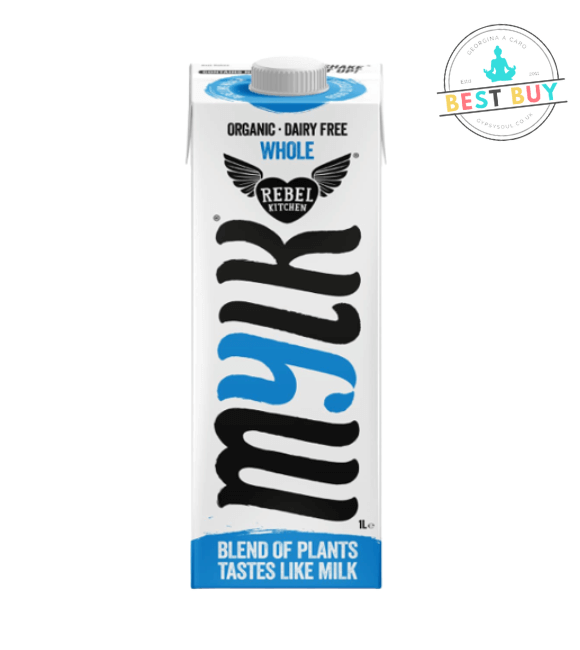
Rebel Kitchen has been carbon neutral since 2019. They measure and offset 100% of their carbon emissions by supporting projects such as wind farms and the regeneration of ecosystems. Their coconuts are responsibly sourced from sustainable farms in the Philippines and Sri Lanka. They are also members of 1% for the planet, meaning they donate 1% of sales to their non-profit partners. Rebel Kitchen is certified B-corp.
Rebel Kitchen makes two plant-based milk, Rebel Kitchen Mylk and Rebel Kitchen Barista Mylk.
Ingredients: Spring water, coconut cream*, brown rice syrup*, cashew*, gluten free oats*, hemp protein*, calcium carbonate, sunflower seed extract*, sea salt, nutritional yeast. *Organic
The Specs:
- Brand: Rebel Kitchen
- Main ingredient: Blend of plants
- Size: 1L
- Organic: Yes
- Sugar free: Yes
- Gluten free: Yes
- Certifications: Certified B-corp, 1% for the Planet, Vegan Society Certified
- Packaging: Recyclable TetraPak carton
The Pros:
- No preservatives
- No thickeners
- No stabilisers
- No refined sugar
- No emulsifiers
The Cons:
- Contains salt
What Others are Saying:
It’s recommended by Bustle and Cosmopolitan. It has a 14.5 out of 20 rating on Ethical Consumer. It’s an Amazon’s Choice and has a 4 rating out of over 300 reviews.
Best Eco-Friendly Packaging: ReRooted

ReRooted is run by Rich, Nick and Dan. They started by making plant-based milks for their local zero waste store called Eat.Food.Love in Totnes, Devon. It was the UK’s first zero waste shop which opened in 2017. I’ve been there myself, it’s a lovely store! Three years on they now deliver across Devon, Bristol, Bath and nationwide. Their ethos is reusing over recycling. All of their local deliveries are done with electric vehicles and they power their entire business with renewable energy.
They make a range of different plant-based milks including, oat, almond, coconut, hazelnut and cashew. The company delivers the milk themselves locally or you can use one of the following companies: Riverford, Abel & Cole and Milk & More. If you live in Devon you can get ReRooted milk from a range of local stockists as well.
Ingredients: Example for oat milk – Triple Filtered Water, Organic Oat Base 10% (water, organic oats), Oat bran, Organic Sunflower Oil, Cornish Sea Salt
The Specs:
- Brand: ReRooted
- Main ingredient: Variety of plant-based ingredients
- Size: 1L
- Organic: Yes
- Sugar free: Yes
- Gluten free: Some yes, some no
- Certifications: Organic Soil Association
- Packaging: Returnable glass bottles
The Pros:
- Returnable glass bottles
- Made in Devon, UK
- Living wage employer
- Won three great taste awards in 2022
- Zero emissions deliveries
The Cons:
- Contains (organic) oil and salt
- Expensive compared to other brands
What Others are Saying:
It scores 16 out of 20 on Ethical Consumer.
Best Soya: Plamil Soya Milk

Plamil, founded in the 1960’s, is the longest-running plant-based business in the UK. It was originally set up to produce an alternative to dairy milk. They now make a whole range of foods as well as their milk. The company is based in Kent, UK. All of their products are made to the highest vegan standards. The milk is made from European organic soya beans and water.
Ingredients: Water, organic de-hulled soya beans (6.7%)
The Specs:
- Brand: Plamil
- Main ingredient: Soy
- Size: 1L
- Organic: Yes
- Sugar free: Yes
- Gluten free: Yes
- Certifications: Ecocert, BRCGS Start, Rainforest Alliance, Soil Association, and Kosher
- Packaging: Recyclable TetraPak carton
The Pros:
- Made in the UK
- Palm oil fee
- No added salt
The Cons:
- Not suitable for people allergic to soy
What Others are Saying:
It scores 16 out of 20 on Ethical Consumer.
Best Almond: Rude Health

Rude Health was founded in 2005 by Nick and Camilla Barnard. So far they have won 23 great taste awards and their products are sold in 45 countries worldwide. As well as their plant-based milks they also sell other food and drink items such as muesli, crackers and flour. Instead of using food additives to thicken their products they use rice, apparently it works just as well but without the hidden nasties.
Most of their ingredients are sourced in Europe, with the exception of coconuts, for obvious reasons. Their almonds are sourced from Sicily, unlike most other brands who get theirs from California. This means they have a lower transportation carbon footprint.
They make a range of plant-based milks including Almond, Coconut, Oat, Soya, Rice, Cashew, Hazelnut, Tiger Nut and Brown Rice. It’s available in most supermarkets and online.
Ingredients: (Almond milk) – Spring water, organic rice, organic Italian almonds (1%) , organic cold-pressed sunflower oil, sea salt.
The Specs:
- Brand: Rude Health
- Main ingredient: Almonds
- Size: 1L
- Organic: Organic options available
- Sugar free: Yes
- Gluten free: Yes
- Certifications: Certified B Corp
- Packaging: 88% bioplastics from sustainable sugarcane
The Pros:
- Nothing artificial
- Nothing refined
- GMO free
- 100% palm oil free
- 88% of packaging is made from recycled materials
- Cartons are 100% recyclable
- 34.4 Tonnes of surplus food donated to FareShare
- 5% of profits go towards charity
The Cons:
- Contains oil
- Contains sea salt
What Others are Saying:
Rude health milk is recommended by the Independent, Good Housekeeping, Womens Health, Cosmopolitan and Bustle. It’s an Amazon bestseller and has a 4.6 rating out of over 300 reviews.
Best Pea: Sproud Original Drink Unsweetened

On March 29th 2023 Sproud became the first ever food brand in the world to receive ISO 26 000 verification for their sustainability work. Here is a statement from, Global CEO, Sara Berger: “Our mission is to make the tastiest, healthiest, most sustainable plant based dairy products on the planet”.
The yellow split peas used in their milk are grown by farmers in France, then the lightweight pea protein is transported to the company in Sweden. The pea protein is then blended with plant-based omega-3 and omega-6, including vitamins A, D and B12.
The milk is not currently organic as there is no access to European, Swedish, Canadian or North American organic pea protein. From their website: ‘Peas are rarely sprayed with pesticides and this means that none to very low amounts of pesticides are detected in the harvested pea plant.’
Sproud make a variety of plant-based milk products including unsweetened milk, barista milk and flavoured milks.
Ingredients: Water, Protein from Pea** (1,9%), Rapeseed Oil, Acidity Regulator (Dipotassium Phosphate), Calcium Carbonate, Calcium Phosphates, Natural Flavouring, Gluten Free Oat Oil, Salt, Vitamins ^Riboflavin, Vitamin D, Vitamin B12], **Origin
The Specs:
- Brand: Sproud
- Main ingredient: Pea
- Size: 1L
- Organic: No
- Sugar free: Yes
- Gluten free: Yes
- Certifications: Certified sugar free by Sugar Wise, Certified Non-GMO in North America
- Packaging: RecyclableTetra Paks made with 87% plant based materials
The Pros:
- High in Vitamin B2, B12, D & Calcium
- Free from Nuts, Gluten & Soy
- No sugars or sweeteners
- High in protein
The Cons:
- Contains oil
- Contains salt
What Others are Saying:
Sproud is recommended by Good Housekeeping, Independent, Standard and Womens Health. It scores 13 out of 20 on Ethical Consumer. It’s an Amazon’s Choice and has a 4.4 rating out of over 660 reviews.
Best Potato: DUG Unsweetened
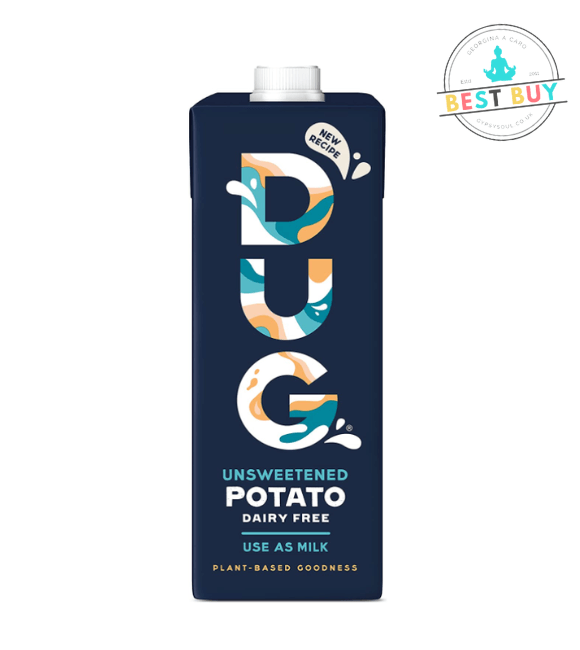
Until I started doing the research for this article I didn’t even know that potato milk was a thing but here we are! DUG is a Swedish brand that is owned by Veg of Lund and is currently sold in Sweden, Ireland and the UK. The company won the World Food Innovations Awards in 2018.
Potatoes don’t require much to grow, making them a super-sustainable plant, especially when compared to almonds, soybeans, oats or dairy. According to their website growing potatoes is twice as efficient as growing oats when it comes to land use and switching to potato-based alternatives could reduce the climate impact by roughly 67%. The DUG Unsweetened has a climate footprint of 0.31 kg CO2e/kg per product.
They sell three main milks which are Unsweetened, Original and Barista. It’s made in England and the raw materials are sourced from Europe.
Ingredients: Water, Potato (4.5%), Rapeseed Oil, Pea Protein, Acidity Regulator (Dipotassium phosphate), Calcium Carbonate, Natural Flavour, Vitamins (D, Riboflavin, B12, Folic acid)
The Specs:
- Brand: Dug
- Main ingredient: Potato
- Size: 1L
- Organic: No
- Sugar free: Yes
- Gluten free: Yes
- Certifications: N/A
- Packaging: RecyclableTetra Paks
The Pros:
- Potatoes are a sustainable crop that use less water and land
- Low climate footprint
- Free-from lactose, milk, soy, gluten and nuts
The Cons:
- Contains oil
- Not sure what the ‘natural flavours’ are?
What Others are Saying:
Dug is recommended by Independent, Standard, Womens Health and the Guardian. It has a score of 14.5 out of 20 on Ethical Consumer.
Others to consider
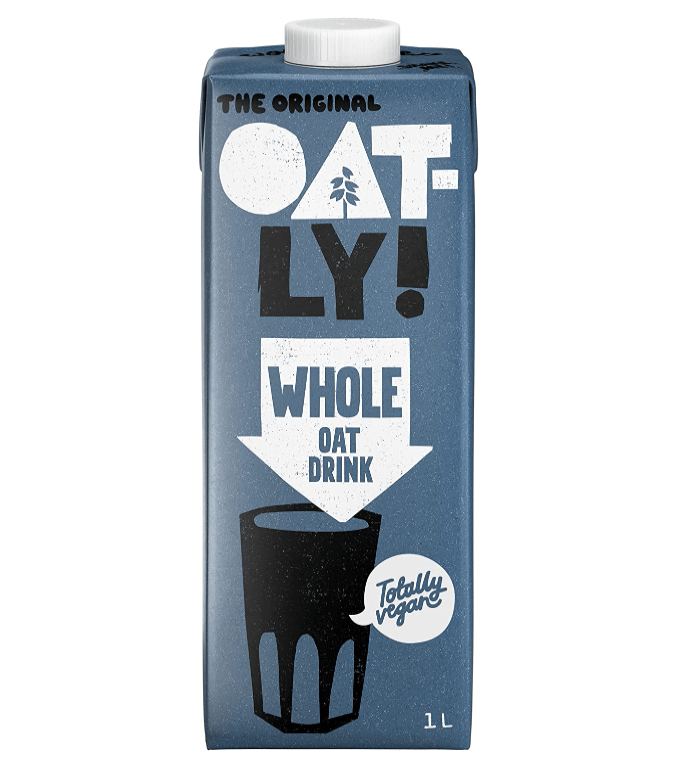
Oatly Oat Drink
Oatly is a popular option in most restaurants and cafes for vegan milk. The milk has been enriched with vitamins D, riboflavin and B12. It doesn’t contain any gums but does contain oil and salt. According to Ethical Consumer Oatly didn’t score well for supply chain management, cocoa supply chain management and palm oil sourcing. They also lost points for excessive remuneration for directors and/or staff. However, they scored highly for carbon management and reporting. It scored 10.5 out of 20 on Ethical Consumer.
Ingredients: Water, Oats 10%, Rapeseed Oil, Acidity Regulator (Dipotassium Phosphate), Minerals (Calcium Carbonate, Potassium Iodide), Salt, Vitamins (D2, Riboflavin, B12
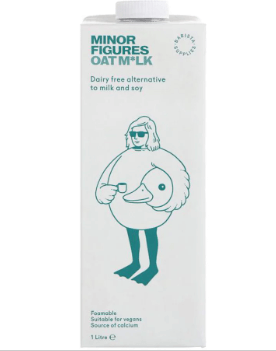
Minor Figures Oat Milk
Minor Figures is a B-corp, carbon neutral company that makes 100% vegan products that don’t harm the planet. Their sustainability mission focuses on sourcing principles. The milk is palm oil free, but does contain oils and salt.
According to Ethical Consumer they scored high for environmental reporting and middle for carbon management & reporting and supply chain management. It scored 14.5 out of 20 by Ethical Consumer. It’s worth noting here that Minor Figures has recently got investment from Danone, (one of the major dairy manufacturers) so that may be worth considering before purchasing.
Ingredients: Water, Oats (10%), Low Erucic Acid Rapeseed Oil, Tricalcium Phosphate, Calcium Carbonate, Salt
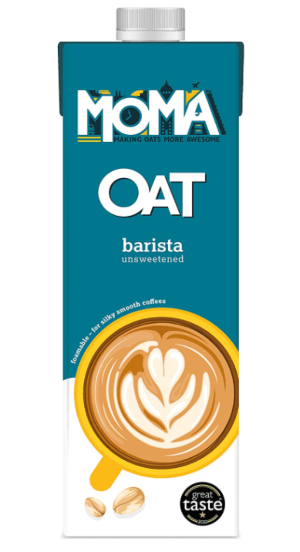
MOMA Barista Oat Drink
MOMA’s founder Tom started by creating a range of oat smoothies and bircher muesli that he sold at Waterloo station. 15 years later the brand now sells a variety of healthy food and drink products. In 2022 MOMA received Great Taste Awards across their entire range of oat drinks.
The company states they are committed to improving their sustainability and recently removed plastic lids from their pots and they’re working on making their packaging fully recyclable. They work closely with Fareshare and other food charities to ensure their products don’t go to waste. MOMA milk is a great source of calcium, iodine and vitamins D3, B2 & B12 and is made in the UK. It does contain oil and salt.
A.G. Barr purchased MOMA in 2022. According to Ethical Consumer A.G.Barr’s Ethiscore is 9.5 out of 20. They scored high for carbon management & reporting and tax conduct and middle for environmental reporting. They scored low for supply chain management and for excessive remuneration for directors and/or staff.
Ingredients: Oat Base (Water, Oats 10%), Rapeseed Oil, Acidity Regulator (Dipotassium Phosphate), Calcium Carbonate, Salt, Vitamins: D3, B2 (Riboflavin), B12, Potassium Iodide
Others to consider:
Here are a few other brands that you may want to consider: Oato Oat, The Bridge, Sharpham Park spelt drinks and Glebe Farm. All of these scored quite high on Ethical Consumer. Other brands not rated by Ethical Consumer but are still popular include Jord, and Borna.
Popular plant-based milks that contain gums:
Here are some of the popular plant-based milks that contain gums: Califa Farms, Alpro Soya, Koko, Good Hemp Milk, Gaia’s Farming Co, nooj, Bonsoy and Mighty Pea. They didn’t make my top list for this reason as I believe they are an unnecessary additive that may cause harm to your health. See my FAQ’s below for more information on this. Obviously I’m not a doctor/dietitian so I’d advise doing your own research too.
Plant-based milks to avoid:
These plant-based milks scored very low on Ethical Consumer: Alpro, Provamel, Soya Soleil and Almond Breeze. Alpro, Provamel and Soya Soleil are all owned by Danone. See below for more information on that. Almond Breeze got bad scores for carbon management and reporting, environmental reporting, palm oil sourcing, supply chain management, lack of transparency on executive pay and factory farming. Almond Breeze milk contains gums.
A note on Alpro
Alpro is owned by Danone, who’s main focus is dairy products. In 2016 Danone’s most recent Position Paper on Animal Testing states that “At Danone, animal testing is conducted in order to ensure the safety and efficacy of new products.” Danone was also a sponsor at Ascot and Royal Ascot horse racing in 2017. Alpro has also been accused of draining water supplies in other countries at the expense of the local communities and ecosystems. There was also a case against them involving the ASA for misleading claims about the environmental benefits of their milk.
In conclusion
If you want a plant-based milk that has minimal ingredients and doesn’t cost the earth check out Plenish. If you want a plant-based milk in returnable and recyclable packing try ReRooted. If you want a milk that is high in protein opt for a pea milk such as Sproud. If you’re after a carbon neutral plant-based milk then Rebel Kitchen is ideal for you. Stay away from plant-based milks that contain gums if possible.
Why You Can Trust Me
My name is Georgina, I’m an award-winning content creator, with a postgraduate certificate in Environmental and Energy Studies. I’ve been sharing my sustainable and zero waste living tips on the internet since 2011. I’m also a certified vegetarian and vegan nutritionist. During my writing career I have created hundreds of buying guides to bring you the best, genuinely, eco-friendly products on the market. Greenwashing is a huge problem and my aim is to help you make more informed, conscious, purchases. I’ve featured in numerous publications such as Ethical Consumer, Apartment Therapy, Huffpost, The Sunday Times, House Beautiful, The Sun, The Observer and many more. You can find out more about me and my life ethos on my About page here.

FAQ’s
What are the most common food additives in plant-based milks?
Gums: Gums can include gellan gum, guar gum, xanthan gum, gum arabica or locust bean gum. They help to extend the shelf life of the product, prevent separation and thicken the product. Recent research has shown these gums can cause gastrointestinal issues.
Carrageenan: Carrageenan is derived from red seaweed. It’s often used as an emulsifier and a thickener for foods and drinks. Recent animal studies have shown carrageenan to cause inflammation and gastrointestinal issues, as well as links to cancer.
Soy and Sunflower Lecithin: Lecithins are another common food additive. They are used as an emulsifier. Soy lecithin is made using GMO soybeans using a hexane extraction process. This means they were likely sprayed with glyphosate and trace amounts of this can end up in the food.
Phosphates: Phosphates, also called disodium phosphate, dicalcium phosphate, phosphoric acid and monosodium phosphate are another food additive that has been linked to health concerns. One study found that they may be linked to kidney complications and organ calcification.
Natural Flavours: I’d also be wary of any product that includes ‘natural flavours’. They are normally isolated from the original source and manipulated in a lab. The purpose of them is to add or enhance the flavour of the product. The problem with natural flavours is the company can add that into their ingredients list without having to disclose exactly what the flavours are or where they came from. The worst part is one natural flavour can contain as much as 100 ingredients!
Why Gellan gum may be bad for you?
Gellan gum is a food additive commonly used as a thickening, stabilising, and gelling agent in a variety of processed foods. While it is considered safe for consumption by regulatory authorities such as the U.S. Food and Drug Administration (FDA) and the European Food Safety Authority (EFSA), there are concerns regarding its potential negative effects on human health.
One major concern is its potential impact on digestive health. Gellan gum has been linked to digestive issues such as bloating, gas, and diarrhoea in some individuals. Its high viscosity can disrupt the normal digestive process, leading to discomfort and digestive disturbances.
Another concern is its origin and production method. Gellan gum is produced through the fermentation of a bacterium called Sphingomonas elodea. Although the gum itself is purified before being used in food, some people may have reservations about consuming a substance derived from bacteria.
Furthermore, there is limited research on the long-term effects of gellan gum consumption. While short-term studies suggest its safety, the lack of extensive research raises questions about its potential cumulative effects on human health.
As with any food additive, moderation is key. While gellan gum may not be inherently harmful, individuals with sensitive digestive systems or those prone to gastrointestinal issues should exercise caution when consuming products containing this additive. It is always advisable to consult a healthcare professional if you have concerns about specific food ingredients and their potential impact on your health.
Why oils in plant-based milks may be bad for you?
The addition of oils in plant-based milks can raise concerns about their potential negative effects on human health.
One concern is the high content of added oils, often used to mimic the creamy texture of dairy milk. These oils are typically extracted from plants and may include refined oils, such as sunflower, safflower, or canola oil. While these oils can provide a desirable mouthfeel, they are often high in omega-6 fatty acids, which can lead to an imbalance in the ratio of omega-6 to omega-3 fatty acids in the diet. Such an imbalance has been associated with chronic inflammation and an increased risk of various health conditions, including cardiovascular disease and certain cancers.
Additionally, the extraction and refining processes used to produce these oils may involve high temperatures, solvents, and chemical treatments. These processes can lead to the formation of harmful compounds such as trans fats, oxidised fats, and free radicals, which have been linked to adverse health effects.
It is important to note that not all plant-based milks contain added oils. Some brands offer oil-free versions or use minimal amounts of healthier oils, such as coconut oil, which contains medium-chain triglycerides (MCTs) known for their potential health benefits.
As with any food, moderation is key. If you choose to consume plant-based milks with added oils, it is important to consider your overall diet and strive for a balanced intake of healthy fats from whole food sources, such as avocados, nuts, and seeds. Consulting with a healthcare professional or registered dietitian can provide personalised guidance based on your specific dietary needs and health goals.
You may also like:
- The Best-Eco Friendly Laundry Detergents UK
- Best Non-Toxic and Eco-Friendly Pillows UK
- The Best Eco-Friendly Toilet Paper UK
- How To Avoid Greenwashing & Shop Sustainably with ethy App
- Sustainable Toilet Paper Alternatives
Prices were accurate at time of publication.
About Gina Caro
Gina is a content creator and award-winning blogger. Her aim is to help you live a more sustainable & simple life. Her blog covers zero waste, minimalism, wellbeing & thrift. She currently lives in Cornwall with her partner, two kids and Charles the dog.
