
This post may contain affiliate links. Please read my terms & conditions for more info.
In today’s environmentally conscious world, the quest for eco-friendly solutions extends to every corner of our daily lives. One often-overlooked area where sustainability is important is in our kitchens, where the dishwasher detergent we choose can make a significant impact on our planet. In our pursuit of clean, sparkling dishes, we shouldn’t compromise on the health of our environment.
In this comprehensive guide I have delved deep into the world of eco-conscious dish washing, exploring the top eco-friendly dishwasher detergents available in the UK. I’ve not only assessed their cleaning prowess but also considered their environmental footprint. From biodegradability and ingredients, to minimal packaging, I have evaluated the criteria that truly make a dishwasher detergent eco-friendly.

Contents:
- Why switch to eco-friendly dishwasher detergents?
- What makes a dishwasher detergent or tablet eco-friendly?
- My top picks
- Best overall
- Best budget
- Best refill
- Best home compostable packaging
- Best palm oil free
- Other eco-friendly dishwasher detergents to consider
- Eco-friendly dishwasher detergents to avoid
- Conclusion
- Why you can trust me
- FAQ’s about eco-friendly dishwasher detergents
Why switch to eco-friendly dishwasher detergents?
Switching to eco-friendly dishwasher detergents is a small but impactful step towards a more sustainable lifestyle. Traditional dishwasher detergents often contain harsh chemicals that harm aquatic ecosystems, contribute to water pollution, and can irritate your skin. In contrast, eco-friendly options are formulated with biodegradable ingredients, reducing their environmental impact.
These detergents are typically free from phosphates, chlorine, and synthetic fragrances, making them safer for both you and the planet. By choosing eco-friendly dishwasher detergents, you not only help protect aquatic life but also reduce your carbon footprint and limit your exposure to toxic chemicals. Additionally, many eco-friendly brands prioritise sustainable packaging, further minimising waste. Some even offer refill options, further cutting down on plastic consumption. Making the switch is a simple yet meaningful way to support a cleaner, healthier environment.
What makes a dishwasher detergent or tablet eco-friendly?
Eco-friendly dishwasher detergents or tablets are designed to minimise their impact on the environment while still cleaning dishes. Here are some key factors that you should consider when buying eco-friendly dishwasher detergent:
Biodegradable Ingredients: Eco-friendly dishwasher detergents should contain biodegradable ingredients that break down naturally in the environment without harming ecosystems. This helps reduce the build up of harmful chemicals in water and soil.
Plant-Based Ingredients: Many eco-friendly dishwasher detergents use plant-based ingredients, such as enzymes and surfactants, which are biodegradable and less harmful to the environment than synthetic chemicals.
Recyclable or Reusable Packaging: Eco-friendly products often come in recyclable or biodegradable packaging to reduce waste and promote sustainable disposal.
Cruelty-Free and Vegan: Eco-friendly brands should be cruelty-free and do not test their products on animals. They may also be vegan, meaning they do not contain any animal-derived ingredients.
No Harsh Chemicals: Eco-friendly detergents are formulated without harsh chemicals like chlorine, artificial fragrances, and synthetic dyes, which can be harmful to both the environment and human health.
All of my top picks are made in the UK, and are free-from parabens, phthalates, SLS, triclosan, and microbeads. The brands are all Leaping Bunny and Vegan Society certified. As well as my top picks I’ve also included other eco-friendly dishwasher detergents that you may want to consider. So, without further ado let’s get to it!
My Top Picks:
- Best Overall: EcoLeaf Dishwasher Tablets *£5.69 at Ethical Superstore
- Best Budget: Miniml Dishwasher Powder *£5.95 at Ethical Superstore
- Best Refill: Fill Dishwasher Powder *£7.44 at Veo
- Best Home Compostable Packaging: Bio-D Dishwasher Tablets *£7.68 at Ethical Superstore
- Best Palm Oil Free: Ecozone Dishwasher tablets *£6.59 at Ethical Superstore
Reviews of The Best Eco-Friendly Dishwasher Detergents, Tablets and Powders
Best Overall: *EcoLeaf Dishwasher Tablets

- Amount of tablets: 150 (bulk buy)
- Cost per dishwasher load: 22p per wash
EcoLeaf is a product sold by Triangle Wholefoods Collective Ltd (t/a Suma Wholefoods). Founded in 1977, they are a worker-owned equal pay co-op, aiming to do business sustainably and inspiring change for good.
I currently use EcoLeaf dishwasher tablets in my home. I get them, packaging free, at my local refill store. I opted for these ones because they are fairly priced, and I can get them local without packaging. I pay 24p per tablet. I can get them for 2p cheaper each online, but I choose to support my local shop instead. I also walk to my local store so there is no transportation/shipping impact from my end.
These dishwasher tablets clean our dishes really well, and leave them smelling fresh. I would definitely recommend this product. You have the option to buy a small pack of 25 tablets, or buy in bulk. I always aim to buy in bulk whenever possible as it reduces the cost, reduces packaging, and transportation impact. These tablets do contain some form of perfume which you may want to consider, especially if you’re sensitive to fragrances.
The Specs:
- Wrapper: Soluble PVA wrapper
- Vegan: Yes
- Cruelty free: Yes
- Paraben free: Yes
- Phthalates free: Yes
- SLS free: Yes
- Triclosan free: Yes
- Microbead free: Yes
- Palm oil free: No, made with sustainable palm oil derivatives
- Certifications: Vegan Society, Leaping Bunny
- Packaging: 100% recyclable cardboard
- Made in: UK
The Pros:
- Good price
- Plant-based, cruelty free formula
- 100% plastic-free
The Cons:
- Contains palm oil
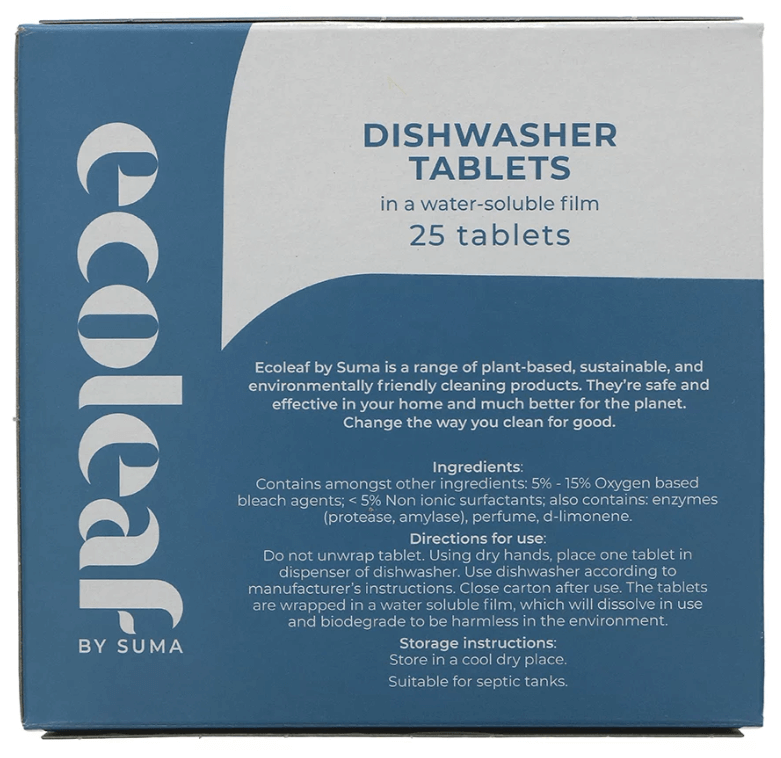
10 main Ingredients: Sodium Carbonate, Sodium Carbonate Peroxide, Citric Acid, Sodium Silicate, Subtilisin, oxygen-based bleach agents, non-ionic surfactants, enzymes (protease, amylase), perfume, limonene.
Ingredients breakdown:
- Sodium Carbonate: also known as soda ash or washing soda, is a white, odourless powder. It‘s used as a pH regulator and water softener in detergents and cleaning products. It also helps remove stains and improve the cleaning efficiency.
- Sodium Carbonate Peroxide: is a chemical compound that releases hydrogen peroxide when dissolved in water. It’s used as a bleaching agent and stain remover in laundry detergents. It helps break down and remove tough stains.
- Citric Acid: is a weak organic acid found in citrus fruits like lemons and oranges. It’s used in cleaning products as a chelating agent to soften water, reduce scaling, and enhance cleaning performance.
- Sodium Silicate: also known as liquid glass, is a compound made from sodium carbonate and silica. It’s used in detergents and cleaning products as a corrosion inhibitor, alkaline builder, and to stabilise bleach.
- Subtilisin: is a protease enzyme derived from bacteria. It’s used in laundry detergents to break down and remove protein-based stains like grass, blood, and food stains.
- Oxygen-based bleaching agents: are compounds that release oxygen when mixed with water. They’re used as bleach alternatives in detergents and cleaning products. They help whiten and brighten fabrics, remove stains, and disinfect surfaces without the use of chlorine bleach.
- Non-ionic surfactants: are surface-active agents that do not carry an electrical charge. They’re used in cleaning products as emulsifiers, detergents, and foaming agents. They help break down and remove greasy and oily stains and improve the spreadability of the product.
- Enzymes: Protease and amylase are enzymes used in laundry detergents. Protease breaks down protein-based stains, while amylase breaks down starch-based stains. Enzymes enhance the cleaning power of the detergent by targeting specific types of stains.
- Perfume: is added to cleaning products to provide a pleasant fragrance.
- Limonene: Limonene is a natural compound found in citrus peels. It’s used as a fragrance and solvent in cleaning products. It gives products a citrus scent and can help dissolve oils and grease
The ingredients above that may have some concerns are Sodium Silicate, Perfume and Limonene. In the environment, Sodium Silicate can contribute to phosphate pollution in water bodies. Perfumes can contain various chemicals, and some people may be sensitive or allergic to certain fragrance ingredients. Some synthetic fragrances may also raise environmental concerns. Limonene is generally safe, but it can contribute to indoor air pollution when used in cleaning products due to the formation of volatile organic compounds (VOCs).
What Others are Saying:
EcoLeaf is rated 14 out of 20 by Ethical Consumer in their ethical and environmental ranking for dishwasher detergents. It’s an Ethical Consumer Best Buy. It’s recommended by Good Housekeeping, Zero Wasted, Moral Fibres, Real Homes, Countryfile and Tiny Eco Home Life. It’s an Amazon’s Choice and is rated 4.4 out of 55 reviews.
Where to Buy EcoLeaf Dishwasher Detergent:
Best Budget: *Miniml Dishwasher Powder

- Amount of powder: 500g
- Cost per dishwasher load: 12p per load (6p if you buy in bulk)
Situated in Yorkshire, Miniml was established by Scott and Emma with a noble mission: to transform our world into a cleaner, more environmentally conscious place to live. They achieve this through their diverse lineup of eco-friendly, refillable cleaning, laundry, and personal care products crafted from naturally sourced, biodegradable ingredients. Miniml proudly presents a zero-waste, closed-loop solution that allows you to purchase their products, utilise them, and subsequently return the empty containers. This process ensures that the containers are cleaned and ready for reuse, effectively eliminating single-use plastic waste.
I use Miniml washing up liquid, laundry detergent, dishwasher rinse, shampoo and conditioner. All of which are great and I can get refills for, and I buy in bulk wherever possible. The only reason I don’t use Miniml dishwasher powder is because I prefer tablets, hence why I use the EcoLeaf ones. Having said that, after doing this research and finding out that the Miniml powder works out at only 12p per load I may well make the switch. If you buy the bulk 20kg bag it costs as little as 6p per load.
As well as the dishwasher powder, Miniml also sells a dishwasher rinse which I use and love. Initially I bought the 500ml glass bottle which I keep under our sink, and I now buy the large 5L containers for refills. Once you have 4 containers you can send them back to the company for reuse.
After using your packaging, you have the option to return it to Miniml without incurring any fees. You can do this by scanning the QR code located on the back of the packaging or on the information card within your order. This process ensures that the packaging is properly cleaned, reused, and refilled, preventing any single-use plastic from being discarded. Alternatively, you can use the link on this page to send back your empty containers.
The Specs:
- Wrapper: N/A
- Vegan: Yes
- Cruelty free: Yes
- Paraben free: Yes
- Phthalates free: Yes
- SLS free: Yes
- Triclosan free: Yes
- Microbead free: Yes
- Palm oil free: No, contains sustainable palm oil
- Certifications: certified cruelty free, Leaping Bunny, Vegan Society
- Packaging: Reusable, recyclable glass bottle
- Made in: UK
The Pros:
- Best budget price compared to other brands
- Minimal ingredients
- Closed-loop system
The Cons:
- Contains palm oil

10 main ingredients: Sodium Percarbonate, Sodium Carbonate, Salt, Sodium Metasilicate, Citric Acid, Amorphous Silica, Acrylic Terpolymer, D-glucopyranose, oligomeric, C8-10 Alkyl glucoside
Ingredients breakdown:
- Sodium Percarbonate: Sodium percarbonate is a chemical compound used as a bleaching agent and a source of oxygen in laundry detergents and cleaning products. It helps remove stains and brighten laundry without the need for chlorine bleach.
- Sodium Carbonate: Sodium carbonate, also known as soda ash or washing soda, is a versatile compound used in cleaning products. It can help remove stains, grease, and mineral deposits.
- Salt: Salt, or sodium chloride, is a common household item. In cleaning products, it can be used as a thickening agent, abrasive, or as an ingredient in various formulations.
- Sodium Metasilicate: Sodium metasilicate is a compound used in cleaning products as a detergent builder and alkaline cleaning agent. It can help remove dirt and stains.
- Citric Acid: Citric acid is a weak organic acid found naturally in citrus fruits. It is used in cleaning products and detergents as a chelating agent, pH regulator, and for its cleaning properties. It can help remove mineral deposits and stains.
- Amorphous Silica: Amorphous silica is a form of silicon dioxide. It is used in cleaning products and abrasives for its abrasive and polishing properties. It can help scrub away dirt and stains.
- Acrylic Terpolymer: Acrylic terpolymers are water-soluble polymers used in cleaning products for various purposes, including as dispersants, thickeners, and soil suspending agents. They can help improve the product’s cleaning performance.
- D-glucopyranose, Oligomeric: This refers to a group of oligomers derived from glucose (a sugar). In cleaning products, these oligomers can serve various functions, such as as a surfactant, thickener, or stabiliser.
- C8-10 Alkyl Glucoside: C8-10 alkyl glucoside is a surfactant derived from natural sources like coconut and glucose. It is used in cleaning products as a surfactant, which means it helps to reduce the surface tension of water, allowing it to spread and penetrate dirt and stains more effectively.
The two ingredients to potentially look out for in this list are Amorphous Silica and Acrylic terpolymers. Amorphous silica is generally safe when used appropriately, but inhalation of fine silica dust should be avoided, as it can be harmful to the respiratory system. Acrylic terpolymers, like many other synthetic polymers, have the potential to become microplastics under certain conditions. Having said that, it’s important to note that acrylic terpolymers are not traditional plastics like polyethylene or polypropylene, and their potential contribution to microplastic pollution is typically considered to be minor compared to other sources of microplastics.
What Others are Saying:
Miniml is rated 15 out of 20 by Ethical Consumer in their ethical and environmental ranking for dishwasher detergents. It’s an Ethical Consumer Best Buy. Miniml has a Trustpilot rating of 4.4 out of over 900 reviews.
Where to Buy Miniml Dishwasher Powder:
Where to Refill:
A lot of wholefood and zero waste stores that offer product refills stock Miniml products. To find a refill store near you search online. If you happen to live in the South West, like me, you may find this blog useful: Zero Waste Food Shops in the South West, UK.
Best Refill: *Fill Dishwasher Powder
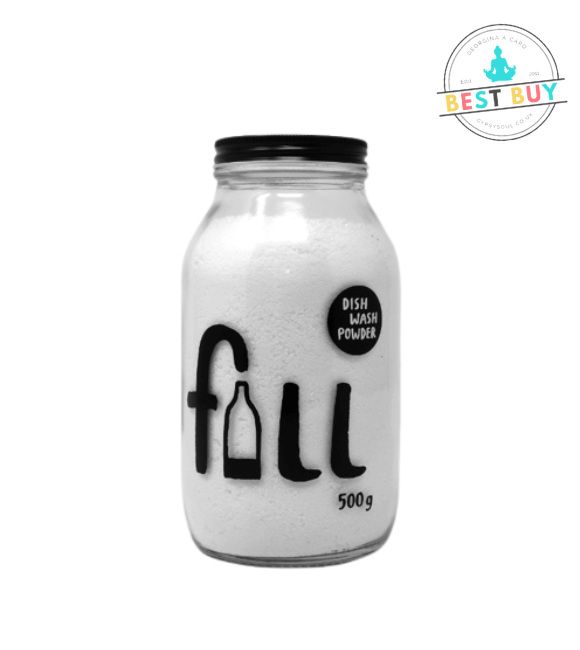
- Amount of powder: 500g
- Cost per dishwasher load: 23p per wash
Fill Refill Co is an independent, family run business, each batch is made at their factory in Northamptonshire by chemists. They take pride in being the original closed-loop, zero-waste household refill company. Their mission is to provide responsible, returnable, and refillable solutions for your laundry, cleaning, body, and hair care needs that not only perform exceptionally but also contribute to reducing waste. They offer all of their products in returnable bulk containers and refillable glass bottles, embodying a style that’s too cool to discard.
This is their ‘new and improved’ formula created in 2021. The ingredients are biodegradable and dye free. It’s delivered plastic-free in a glass container. The refill arrives in a recycled plastic tub, which is returnable to Fill’s using their closed-loop system. The company is a member of 1% for the planet. I haven’t tried Fill myself but I’ve heard good things.
The Specs:
- Wrapper: No wrapper, loose powder
- Vegan: Yes
- Cruelty free: Yes
- Paraben free: Yes
- Phthalates free: Yes
- SLS free: Yes
- Triclosan free: Yes
- Microbead free: Yes
- Palm oil free: No, contains palm oil certified by the RSPO
- Certifications: certified B Corp company, Living Wage Employer, Vegan certified, Leaping Bunny certified
- Packaging: 100% recyclable/reusable glass jar
- Made in: UK
The Pros:
- Refillable
- You can send back tubs (for free) for reusing
- 100% plastic-free
- No toxic ingredients
- No microplastics
The Cons:
- Glass containers may not be suitable for everyone

11 main ingredients: Sodium Percarbonate, Sodium Citrate, Sodium Carbonate, Sodium Silicate, Sodium Chloride, Sodium Sulphate, Sodium Gluconate, Essential Oils, Glycerine (Glycerin), Pentyl Polyglucoside and Trisodium Dicarboxymethyl Alaninate.
Ingredients breakdown:
- Sodium Percarbonate: This is a chemical compound used as a bleaching agent and a source of oxygen in laundry detergents and cleaning products. It can help remove stains and brighten laundry without the need for chlorine bleach.
- Sodium Citrate: Sodium citrate is a salt of citric acid and is used in various applications. In cleaning products, it may serve as a chelating agent and pH regulator.
- Sodium Carbonate: Also known as soda ash or washing soda, sodium carbonate is a versatile compound used in cleaning products, water softeners, and as a pH regulator. It can help remove stains, grease, and mineral deposits.
- Sodium Silicate: Sodium silicate is a compound with a variety of industrial and household uses. In laundry detergents it acts as a detergent builder, helping to remove dirt and stains.
- Sodium Chloride: Common table salt. In cleaning products, it can be used as a thickening agent or abrasive.
- Sodium Sulphate: Sodium sulfate is a salt used in detergents and cleaning products as a filler or viscosity regulator. It helps to stabilise the product’s texture.
- Sodium Gluconate: Sodium gluconate is a chelating agent and a water-soluble compound used in cleaning products to bind to mineral ions, preventing them from interfering with the cleaning process.
- Essential Oils: Essential oils are concentrated plant extracts that provide fragrance and sometimes antimicrobial properties to various products, including cleaning products and personal care items.
- Glycerine (Glycerin): Glycerine is a colourless, odourless, and sweet-tasting liquid. It is used in personal care products like soaps, lotions, and toothpaste as a moisturising and humectant agent. In cleaning products, it may serve as a surfactant or a component to enhance product texture.
- Pentyl Polyglucoside: This is a type of surfactant derived from renewable resources like corn and coconut. It is used in cleaning products for its cleaning and foaming properties and is considered environmentally friendly.
- Trisodium Dicarboxymethyl Alaninate: This compound is used in cleaning products as a chelating agent, which helps to bind to metal ions and improve the product’s cleaning efficiency.
The only ingredient that has a slight environmental concern is Sodium Silicate which, in the environment, can contribute to phosphate pollution in water bodies.
What Others are Saying:
Fill is rated 15.5 out of 20 by Ethical Consumer in their ethical and environmental ranking for dishwasher detergents. It’s an Ethical Consumer Best Buy. It’s recommended by Moral Fibres and Zero Wasted.
Where to Buy Fill Dishwasher Detergent:
Where to Refill:
You can purchase refills on the Veo website. You can then freepost return the tub for another refill.
Best Home Compostable Packaging: *Bio-D Dishwasher Tablets

- Amount of tablets: 30
- Cost per dishwasher load: 26p per wash
In 1989, Bio D was established by Michael Barwell, with a vision to produce cleaning products that harnessed the power of naturally derived alternatives. His objective was clear: to develop cleaning solutions that would efficiently cleanse while safeguarding both people and the environment. Following Michael’s retirement, the company transitioned into the capable hands of Lloyd, the original employee of Bio D.
Bio D proudly manufactures all of its products within the UK and maintains comprehensive traceability for every ingredient utilised, ensuring their ethical and sustainable sourcing. Notably, in 2021, the company made a significant environmental impact by reducing CO2e emissions by over 85 tons through the adoption of post-consumer recycled bottles. For more information on Bio D’s sustainability efforts, you can find their sustainability reports on their website.
It’s worth noting that the product contains Subtilisin which scores moderate for allergies & immunotoxicity.
The Specs:
- Wrapper: biodegradable water-soluble wrapper
- Vegan: Yes
- Cruelty free: Yes
- Paraben free: Yes
- Phthalates free: Yes
- SLS free: Yes
- Triclosan free: Yes
- Microbead free: Yes
- Palm oil free: No, contains palm oil certified by RSPO
- Certifications: Vegan certified, Leaping Bunny Certified
- Packaging: 100% recycled cardboard
- Made in: UK
The Pros:
- Can compost packaging at home
The Cons:
- More expensive compared to other brands

12 main ingredients: Sodium Carbonate, Trisodium Citrate, Sodium percarbonate, Citric Acid, Sodium Bicarbonate, Sodium Silicate, Cetearyl Alcohol, Polycarboxylates, Oxygen Based Bleaching Agent, Glycerol, Subtilisin, Amylase.
Ingredients breakdown:
- Sodium Carbonate: Also known as soda ash or washing soda, sodium carbonate is a versatile compound used in cleaning products, water softeners, and as a pH regulator. It can help remove stains, grease, and mineral deposits.
- Trisodium Citrate: is a salt of citric acid and is used in various applications. In cleaning products, it may serve as a chelating agent and pH regulator.
- Sodium Percarbonate: is a chemical compound used as a bleaching agent and a source of oxygen in laundry detergents and cleaning products. It helps remove stains and brighten laundry without the need for chlorine bleach.
- Citric Acid: is a weak organic acid found naturally in citrus fruits. It is used in cleaning products and detergents as a chelating agent, pH regulator, and for its cleaning properties. It can help remove mineral deposits and stains.
- Sodium Bicarbonate: Commonly known as baking soda, sodium bicarbonate is used in cleaning and deodorising products. It can help neutralise odours and serve as a mild abrasive for cleaning.
- Sodium Silicate: is a compound with a variety of industrial and household uses. In cleaning products, it may be used as a detergent builder, helping to remove dirt and stains.
- Cetearyl Alcohol: Cetearyl alcohol is a mixture of fatty alcohols derived from natural sources like coconut oil. It is often used in personal care products such as lotions, creams, and conditioners as an emollient and thickening agent.
- Polycarboxylates: Polycarboxylates are a class of water-soluble polymers used in cleaning products. They can serve various functions, including as dispersants, scale inhibitors, and builders.
- Oxygen-Based Bleaching Agent: This term typically refers to chemicals like sodium percarbonate or hydrogen peroxide, which release oxygen when dissolved in water. They are used in laundry detergents and cleaning products to remove stains and brighten fabrics without the need for chlorine bleach.
- Glycerol (Glycerin): Glycerol is a colourless, odourless, and sweet-tasting liquid. It is used in personal care products like soaps, lotions, and toothpaste as a moisturising and humectant agent. In cleaning products, it may serve as a surfactant or a component to enhance product texture.
- Subtilisin: Subtilisin is an enzyme used in detergents to break down protein-based stains, such as those from food and grass.
- Amylase: Amylase is another enzyme used in detergents to break down starch-based stains, such as those from pasta and rice.
The only ingredients that you may wish to look more into is Sodium Silicate which can contribute to phosphate pollution in water bodies.
What Others are Saying:
Bio-D is rated 16 out of 20 by Ethical Consumer in their ethical and environmental ranking for dishwasher detergents. It’s an Ethical Consumer Best Buy. It’s recommended by Tiny Eco Home Life.
Where to Buy Bio-D Dishwasher Detergent:
Best Palm Oil Free: *EcoZone Dishwasher Tablets
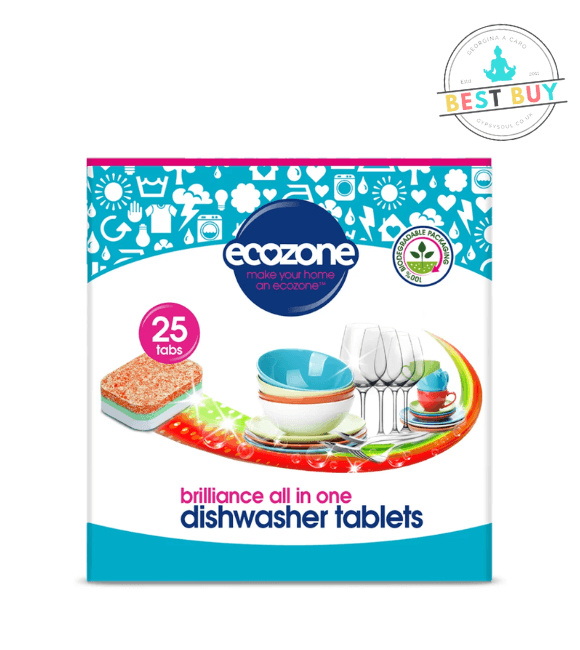
- Amount of tablets: 250
- Cost per dishwasher load: 25p per load
Ecozone, a British company, firmly believes that each of us can bring about significant positive changes for both the present and the future by making small adjustments. They are committed to a vegan and Certified Cruelty-Free approach, refraining from using any animal-derived ingredients.
Ecozone firmly advocates the idea that homes should be secure and pristine environments for all families. They champion the battle against germs without compromising on safety or resorting to toxic solutions.
One potential downfall of EcoZone is the tablets may contain microplastics, also known as plastic based polymers. I have covered this in more detail for you below.
Like most of the eco-friendly brands they are cheaper to buy in bulk if you can.
The Specs:
- Wrapper: fast dissolving soluble wrapper
- Vegan: Yes
- Cruelty free: Yes
- Paraben free: Yes
- Phthalates free: Yes
- SLS free: Yes
- Triclosan free: Yes
- Microbead free: Yes
- Palm oil free: Yes
- Certifications: AllergyUK, PETA approved, Leaping Bunny, Vegan certified
- Packaging: 100% recyclable cardboard
- Made in: UK
The Pros:
- Palm oil free
- Good for allergy sufferers
- Cuts through grease
- Septic tank safe
- Aquatic life safe
- Wheat free product
- Pet friendly
The Cons:
- Slightly higher price compared to other brands
- May contain microplastics

21 main ingredients: Sodium Citrate, Sodium Carbonate Peroxide, Sodium Carbonate, Sodium Sulfate, Sodium Chloride, Sodium Bicarbonate, Sodium Silicate, Tetraacetyl Ethylene Diamine (TAED), Sodium Polyacrylate, 2-Propylheptanol Ethoxylated Propoxylated, Trisodium Dicarboxymethyl Alaninate, Acrylic / Sulphonic Acid Copolymer, Polyethylene Glycol, Subtilisin, Sodium Acrylic Acid/MA Copolymer, Alfa – amylase, Lemon Parfum, Polysiloxane, Acid Yellow 23 Aluminium Lake (E102), Acid Blue 9 Aluminium Lake (E133), Red ST
Ingredients breakdown:
- Sodium Citrate: A salt of citric acid used as a pH regulator and buffering agent.
- Sodium Carbonate Peroxide: A chemical compound used as a source of oxygen in detergents and cleaning products.
- Sodium Carbonate: Also known as soda ash or washing soda, it is a water softener and cleaning agent.
- Sodium Sulfate: A salt used as a filler, detergent builder, or viscosity regulator in various products.
- Sodium Chloride: Common table salt, often used as a thickening agent or abrasive in cleaning products.
- Sodium Bicarbonate: Baking soda, used as a cleaning and deodorising agent.
- Sodium Silicate: A compound used in detergents for its cleaning and anti-corrosive properties.
- Tetraacetyl Ethylene Diamine (TAED): An activator for bleach in laundry detergents.
- Sodium Polyacrylate: A water-absorbing polymer often used in diapers and as a thickening agent
- 2-Propylheptanol Ethoxylated Propoxylated: A surfactant used for its cleaning properties.
- Trisodium Dicarboxymethyl Alaninate: A chelating agent used in detergents to bind metal ions.
- Acrylic/Sulfonic Acid Copolymer: A water-soluble polymer used for various purposes, including as a scale inhibitor in detergents.
- Polyethylene Glycol: A water-soluble polymer with various applications, including as a thickening or dispersing agent.
- Subtilisin: An enzyme used in detergents to break down protein-based stains.
- Sodium Acrylic Acid/MA Copolymer: Another type of water-soluble polymer used in detergents for various purposes
- Alfa-amylase: An enzyme used to break down starch-based stains.
- Lemon Parfum: Lemon fragrance or scent.
- Polysiloxane: A silicone-based compound used as a defoaming agent and in various other applications.
- Acid Yellow 23 Aluminium Lake (E102): A food colouring additive.
- Acid Blue 9 Aluminium Lake (E133): Another food colouring additive.
- Red ST: The specific composition of this ingredient is not clear, but it is likely a dye or colourant.
The two ingredients to potentially look out for is Sodium polyacrylate which in itself is not a traditional plastic, but it can potentially contribute to microplastic pollution under certain conditions. Having said that, sodium polyacrylate is designed to be highly water-absorbent and does not persist in the environment in the same way that traditional plastics do. It is more likely to break down into its constituent components under natural conditions, and these components are not considered persistent or harmful to the environment.
It’s also typically used in relatively low quantities in products like nappies, so its contribution to microplastic pollution is generally minimal compared to other sources of microplastics. To learn more about microplastics check out this information provided by Beat The Micro Bead.
The second is Sodium Silicate which can contribute to phosphate pollution in water bodies.
What Others are Saying:
EcoZone is rated 12.5 out of 20 by Ethical Consumer in their ethical and environmental ranking for dishwasher detergents. It’s recommended by The Independent, Real Homes, CountryFile and Tiny Eco Home Life.
Where to Buy EcoLeaf Dishwasher Detergent:
Others To Consider:
Smol
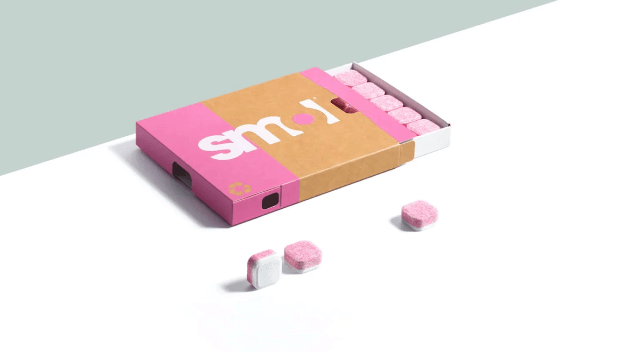
Smol, based in Europe, is a company that is certified cruelty-free. It’s rated 14 out of 20 by Ethical Consumer. It has a Trustpilot rating of 4.5 out of 3,939 reviews. There is no information on their website about their approach to toxic chemicals, palm oil or liquid polymers or workers’ rights in their supply chain. From their website: we use lower levels of added chemicals per wash compared to the other brands. Their 3-in-1 eco dishwasher tablets are vegan, Leaping Bunny approved and free from animal-derived ingredients. They use 100% plastic-free packaging and fewer chemicals.
The reason Smol didn’t make my top list is because their products contain some toxic ingredients such as liquid polymers, acrylic copolymer, optical brighteners and petrochemical surfactants.
You can get a free trial of Smol by visiting their website.
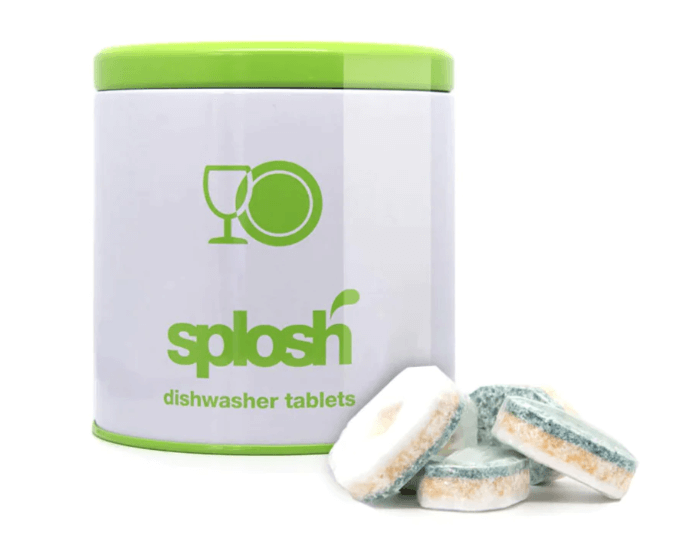
Splosh
Every Splosh bottle is refillable with their concentrated refill pouches, which means you can cut plastic waste by 90% and CO2 emissions by around 75%. When you return your used refill pouches to Splosh, they upcycle them into new products. Splosh dishwasher tablets come in a tin which can be reused again and again. You then order refills which arrive in a cardboard box. The tablets come wrapped in water-soluble film. They are cruelty free, vegan friendly and septic tank safe.
The reason they didn’t make my top list is because they’re slightly more expensive than the other brands. It works out at 26p per load, unless you subscribe and then it’s only 23p per wash.
Check out my full review of Splosh here.
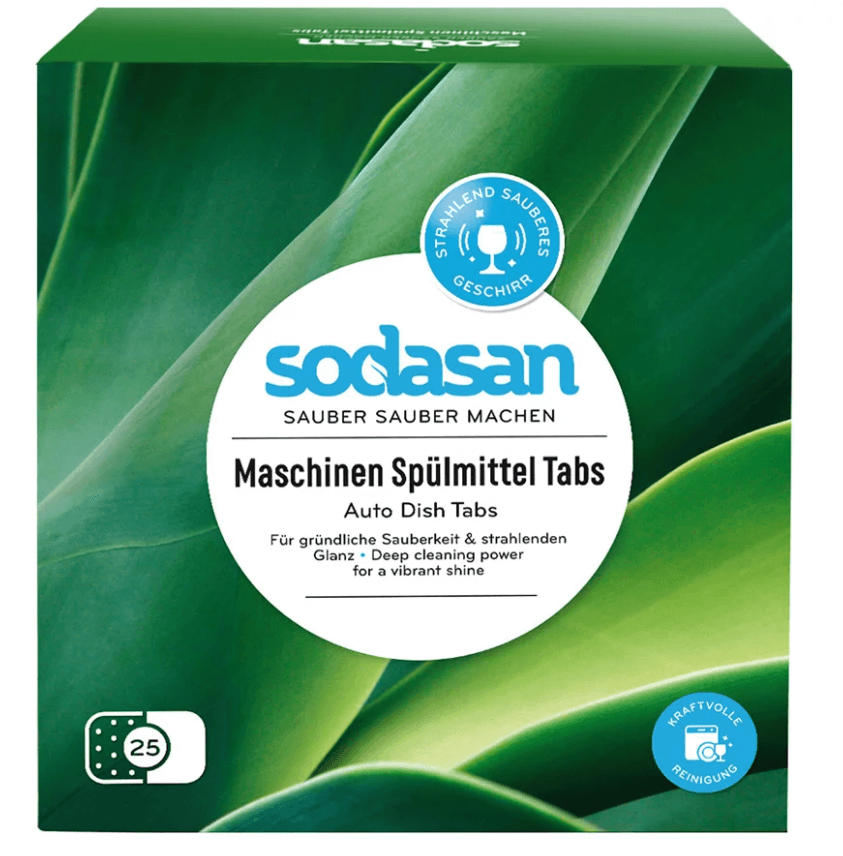
Sodasan
Sodasan dishwasher tablets are free from enzymes, phosphates and GM ingredients, and don’t contain any chlorine-releasing substances. The company is EcoCert certified and suitable for vegans. The dishwasher tablets are cruelty free and made using carbon neutral processes. They’re suitable for all conventional dishwashers.
The reason Sodasan didn’t make my top picks list is because it’s made in Germany, which means it will have a higher transportation footprint.
You can buy Sodasan at *Ethical Superstore, *Big Green Smile and *Amazon.
Marcel’s Green Soap All-in-One Dishwasher Tabs
Marcel only uses plant-based ingredients and is 100% vegan. Their products are free from animal testing, parabens, SLS, mineral oils, microbeads, phthalates, phosphates, dmdm hydantoin, triclosan, chlorine bleach and GMOs. The tablets are suitable for septic tanks and are biodegradable.
The reason they didn’t make my top list is because the products are made in Denmark, which means a higher transportation footprint.
You can buy Marcel’s Green Soap dishwasher tablets at *Ethical Superstore, *Big Green Smile and *Amazon.

A few more eco-friendly brands you might want to consider:
Homethings, Ocean Saver, Attitude, MACK, Peace With The Wild, SESI, Astonish and Sonett.
Brands to avoid:
Ecover
Ecover products feature a potentially harmful ingredient known as Laureth-7, which is an Ethoxylated compound with toxic properties. Additionally, its formulation comprises perilous substances like parabens, triclosan, and phthalates. Both triclosan and parabens are under suspicion for their potential to disrupt endocrine functions, while phthalates are confirmed endocrine disruptors.
Beyond its product ingredients, Ecover raises ethical concerns in various areas. These encompass issues related to its environmental reporting, its stance on addressing climate change, and the management of its supply chain. Furthermore, the company is owned by SC Johnson, a corporation known for conducting animal testing.
In terms of its ethical rating, Ecover received a score of only 4 out of 20 from Ethical Consumer, indicating several ethical concerns associated with its products and practices.
Method
Method’s product lineup includes a variety of concerning components. These encompass non-biodegradable microplastic polypropylene terephthalate, an optical brightener, and Lilial, a fragrance known to be carcinogenic, leading to its prohibition for cosmetic use within the European Union.
It’s also worth mentioning that Method faced a legal lawsuit in the United States over allegedly mislabeling their products as “non-toxic,” raising questions about their product claims. Furthermore, Method is under the ownership of SC Johnson, a company with a history of conducting animal testing.
In terms of its ethical standing, Method received a meager score of 4 out of 20 in an assessment conducted by Ethical Consumer, highlighting several ethical concerns surrounding its products and corporate practices.
The worst rated eco-friendly dishwasher detergents according to Ethical Consumer are:
- Finish dishwasher powder, gel and tabs (Reckitt)
- Fairy dishwasher tabs (Proctor and Gamble)
- Method dishwasher pods (SC Johnson)
- Ecover dishwasher tablets (SC Johnson)
These all score between 1 and 4 out of 20.
In conclusion
If you’re in need of a good all-round eco-friendly dishwasher tablet that is fairly priced choose *Ecoleaf. If you’re on a tighter budget but still want quality eco-friendly products that opt for *Miniml. If you want 100% palm-oil free dishwasher tablets choose *EcoZone. If you want a dishwasher detergent that is 100% plastic-free with zero microplastics then opt for *Fill.
To ensure the products you are buying are truly eco-friendly, ethical and sustainable, stay away from the big companies such as SC Johnson, Proctor and Gamble, Reckitt and Unilever.
Why you can trust me
I’m Georgina, a content creator, holding a postgraduate certificate in Environmental and Energy Studies. My journey in sharing sustainable living wisdom on the internet dates back to 2011. I’m also a certified nutritionist specialising in both vegetarian and vegan diets. Over my extensive writing career, I’ve meticulously crafted numerous buying guides to empower my audience with access to the finest genuinely eco-friendly products available.
In a world plagued by greenwashing, my primary objective is to help you make more informed and conscientious purchasing decisions. My expertise has been featured in a multitude of respected publications, including Ethical Consumer, Apartment Therapy, Huffpost, The Sunday Times, House Beautiful, The Sun, The Observer, and many others.

FAQ’s About Eco-Friendly Dishwasher Detergents
What harmful ingredients are in dishwasher tablets?
Ingredients to avoid in dishwasher tablets include:
Chlorine Bleaches: Chlorine beaches are used in most traditional household cleaners. When they break down toxic substances are released which are similar to pesticides. Brands that have officially stated that their dishwasher tablets do not include chlorine are Fill Refill, Sodasan and SESI.
Parabens: Parabens are synthetic chemicals commonly used as preservatives in various personal care and cosmetic products. They are a known hormone disruptor, especially estrogen. There are concerns of the link between parabens and hormone-related health issues, such as breast cancer, reproductive problems, and early puberty. They are also not easily biodegradable, which means they can persist in the environment.
Phosphates: Phosphates can cause algal blooms in waterways which leads to dead zones, causing issues for aquatic life.
Phthalates: Phthalates are a group of synthetic chemicals. They are known to be endocrine disruptors, which means they can interfere with the endocrine system, particularly by mimicking or blocking hormones like estrogen. This disruption has been linked to various health issues, including reproductive and developmental problems, such as reduced fertility, birth defects, and hormonal imbalances. They also can pose risks to aquatic life and ecosystems.
Others to watch out for include:
- Benzalkonium Chloride (BAC)
- Didecyldimethylammonium Chloride (DDAC)
- E.D.T.A. (Ethylenediaminetetraacetic Acid)
- Formaldehyde
- GMOs/ SMOs
- Isothiazolinone Derivatives
- Lanolin
- Microplastics
- Optical Brighteners
- Sulphates (i.e. SLS/ SLES)
- Synthetic Dyes
- Synthetic Perfumes
- Tallow
- Titanium Dioxide
- Triclosan
- Urea
What is a natural alternative to dishwasher tablets?
The closest natural alternative to dishwasher tablets is baking soda. You can make your own dishwasher tablets using baking soda, and citric acid. The only issue is you may find it just doesn’t work as well as the store bought products. This is because almost all store bought dishwasher tablets contain sodium silicate powder. It works by rinsing away food debris and leftover soap. The bad news is sodium silicate is only available commercially in the UK.
What is an environmentally safe alternative for dishwasher rinse aid?
Citric acid is the best environmentally safe alternative to dishwasher rinse aid. To use it, mix one tablespoon of citric acid with ¼ cup (4 tbsp) of boiling water. Mix together well and then pour into the rinse aid dispenser. Run your dishwasher as normal.
Alternatively, buy an eco-friendly dishwasher rinse aid such as the Miniml one.
Other blogs you may find interesting:
Prices were accurate at time of publication.
*Affiliate links
About Gina Caro
Gina is a content creator and award-winning blogger. Her aim is to help you live a more sustainable & simple life. Her blog covers zero waste, minimalism, wellbeing & thrift. She currently lives in Cornwall with her partner, two kids and Charles the dog.
