This post may contain affiliate links. Please read my terms & conditions for more info.


This post may contain affiliate links. Please read my terms & conditions for more info.
Growing your own food is not only better for your health, but also good for the environment too. Unfortunately, these days, most of our food contains harmful toxins, unnecessary ingredients and microplastics. It’s very hard to live a clean life in this modern world, however there are some things you can do to minimise your exposure. Growing your own food is one of the ways.
It’s estimated that over one-third of Brits grow their own food, and if we utilised urban green spaces more we could grow up to 40% of our fruit and vegetables right here in the UK, rather than importing goods. During lockdown the interest in growing your own food at home rose by 75%, especially among 25 to 34 year olds.
Some of the benefits of growing your own food include:
If you’re new to growing your own food then I’d highly recommend starting small. There’s a lot to learn for beginners so do your research and take it slowly. Below are my top tips for growing your own food at home.
Before you begin, do your research. Find out which foods are easy to grow and thrive in your local area. Pick a few to start with and see how you get on. If you’re based in the UK check out this blog: 10 Easy to Grow Fruit and Vegetables. There are so many great resources online now which you can access for free.
Top tip: To save time, pick foods that regrow every year by themselves.
Having the right tools for the job is going to make your ‘grow your own’ experience so much easier. However, before you hop foot it to your local garden centre to spend your life savings, have a look on borrow sites such as the Library of Things. You can hire rather than buy tools. Alternatively, ask friends if you can borrow tools or check out second hand selling sites such as Facebook marketplace and Gumtree for second hand gardening tools. Don’t forget to reuse and recycle items that you already have for your garden too. For example, old tires or welly boots make great planters.
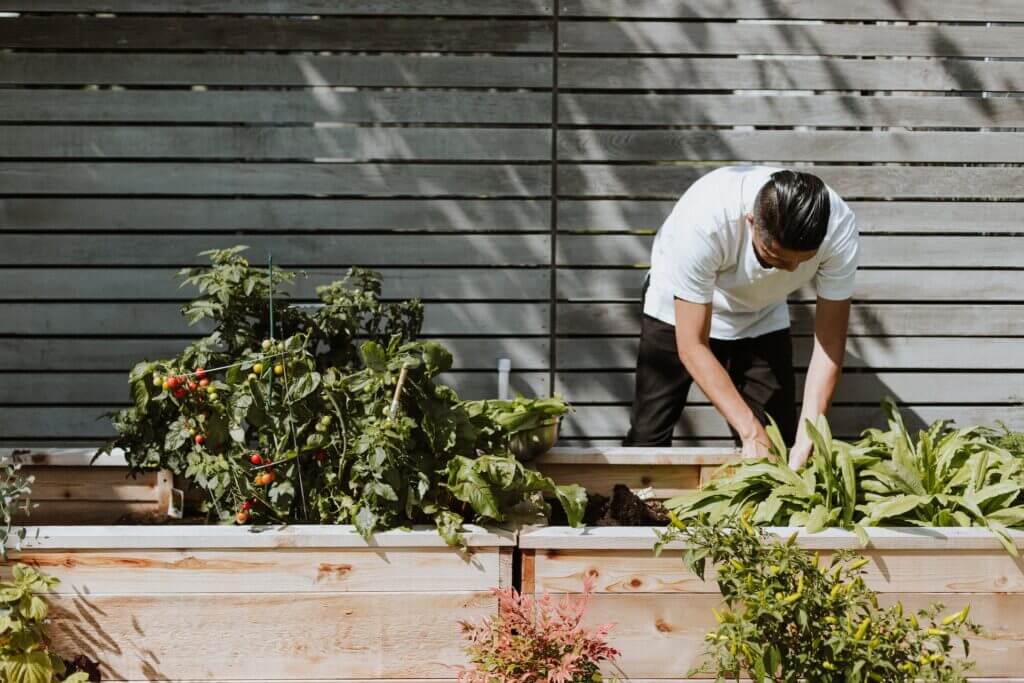
Once you get into the swing of things you may wish to invest in more equipment. One thing I would highly recommend getting is garden sleepers. They make gardening a lot easier as everything is raised higher, and also look great in your garden
This may sound silly but remember to grow foods you actually eat and like. So many people grow foods because they’re easy, but don’t actually like to eat them! Stick to products you want to eat. If you end up with surplus stock, either learn how to preserve the food or give it away to friends and family.
Setting up a home composting system is a great way to save money on compost and ensure it is chemical free. The type of composting system you will need depends on where you are in the world, and what kind of space you have.
The main types are:
Personally, I have always used a simple composting bin and it works fine for us. Check with your local council before buying a bin as some councils provide them free of charge. Alternatively, check out the second hand sites.
One of the best things we did in our greenhouse was set up an *automatic watering system. It may sound fancy but they’re actually very reasonably priced and simple to set up. You can now get *solar watering systems too. The one we had was super simple and only cost us about £12, but it did the job. They’re great for lazy gardeners or anyone, like me, that has a bad memory.
The most important thing to remember is to have fun. Enjoy the ‘grow your own’ journey and get the whole family involved. Happy growing!
Header image by Andrus Lukas on Unsplash
Gina is a content creator and award-winning blogger. Her aim is to help you live a more sustainable & simple life. Her blog covers zero waste, minimalism, wellbeing & thrift. She currently lives in Cornwall with her partner, two kids and Charles the dog.