
This post may contain affiliate links. Please read my terms & conditions for more info.
As the days get shorter and sunlight grows scarce, many of us start to feel that familiar winter slump including low energy, mood dips, and more frequent colds. Personally I always feel the shift the minute the clocks go back.
This is especially true for anyone, like me, that lives in the UK where our access to daylight is seriously limited. Is there anything worse than going to work in the dark, to then come home in the dark. Luckily there is something you can do to help lessen the effects of this change in season, and that is to start taking “the sunshine vitamin’: Vitamin D.

Is lack of Vitamin D in the UK actually an issue?
- According to the UK National Diet & Nutrition Survey (NDNS) conducted at Manchester University ‘almost one in three” adults aged 19-64 had inadequate vitamin D levels during the months of January to March.
- The same study also stated that deficiency appears to be increasing in the UK over recent years.
- Meanwhile, a major UK Biobank study found that vitamin D deficiency (serum 25-hydroxyvitamin D < 25 nmol/L) was significantly more common in winter/spring than in summer/autumn, and higher in the northern UK than the south.
Saying that it’s not just a UK issue, low vitamin D is a global concern. According to a global meta-analysis of nearly 8 million people in 81 countries, almost one in six had vitamin D levels below 30 nmol/L, and nearly half fell below 50 nmol/L. Researchers describe the problem as so widespread that “~1 billion people worldwide are affected with vitamin D deficiency and ~50% of the global population have vitamin D insufficiency”
So what actually happens to your body, and mind, if you don’t get enough VitaminD?
What Happens When You Don’t Get Enough Vitamin D
🦴 Weakened bones and teeth – due to reduced calcium absorption, leading to problems like osteomalacia in adults and rickets in children.
💪 Muscle weakness and fatigue – vitamin D helps muscle function and energy production.
🧠 Low mood and “winter blues” – low levels are associated with higher rates of depression and seasonal mood changes.
🦠 Reduced immune support – deficiency may make you more prone to colds, flu, and other infections.
💗 Increased inflammation – low vitamin D can affect how the immune system regulates inflammation, impacting long-term health.
🕊️ Slower recovery and general tiredness – the body may take longer to heal or recover from illness or exercise when vitamin D is low.
Vitamin D plays a crucial role in how our bodies function, it helps regulate calcium and phosphate, which keep our bones, teeth, and muscles healthy. When levels drop too low, the effects can show up in subtle but serious ways. Deficiency is linked to bone softening (osteomalacia) in adults and rickets in children, conditions that cause pain, muscle weakness, and fractures.
Beyond bone health, research has linked low vitamin D to fatigue, low mood, impaired immune function, and a greater susceptibility to infections such as colds and flu. A review in The BMJ found that vitamin D supplementation can help protect against acute respiratory infections, particularly in those who are deficient. Meanwhile, large observational studies suggest that people with low vitamin D are more likely to experience mood disorders, including depression, possibly because vitamin D receptors are found in areas of the brain involved in mood regulation.
There’s also growing interest in vitamin D’s role in immune balance and inflammation, with studies showing that deficiency may contribute to autoimmune conditions and slower recovery from illness.
You may also like: Natural Ways to Ease Pain & Inflammation

The Problem with Standard Vitamin D Supplements
Most Vitamin D supplements use a form called cholecalciferol (D3). It’s effective for many people, but not everyone absorbs it well. That’s because D3 has to go through a few conversion steps in the liver and kidneys before the body can use it.
For those with gut, liver, or absorption issues, this process can be inefficient, meaning that even if you’re taking your daily supplement, your body might not actually be getting what it needs.
Meet Calcifediol: A More Active, Body-Ready Form
That’s where calcifediol comes in. It’s the form of Vitamin D that’s already been converted into the version your body can use directly: 25-hydroxyvitamin D.
Because it’s already in that “ready-to-go” state, calcifediol is absorbed faster and more predictably than standard D3. This means your blood Vitamin D levels can rise more quickly and consistently, which is particularly helpful for people who’ve struggled to get their levels up despite supplementation.
According to clinical research, calcifediol can be up to three times more effective at increasing blood Vitamin D levels compared with traditional D3.
Daily’s Vitamin D: The UK’s Only Calcifediol Supplement
While calcifediol has been used in clinical settings for years, it’s only recently become available as a consumer supplement in the UK, thanks to Daily’s vitamin D supplement.
Made by Daily, a UK wellness brand focused on science-backed simplicity, this is currently the only calcifediol supplement available in the UK. It’s designed for better absorption and consistent results, even for those with compromised gut or liver function.
Each capsule contains a clean, research-backed dose that helps maintain optimal Vitamin D levels, without the guesswork.
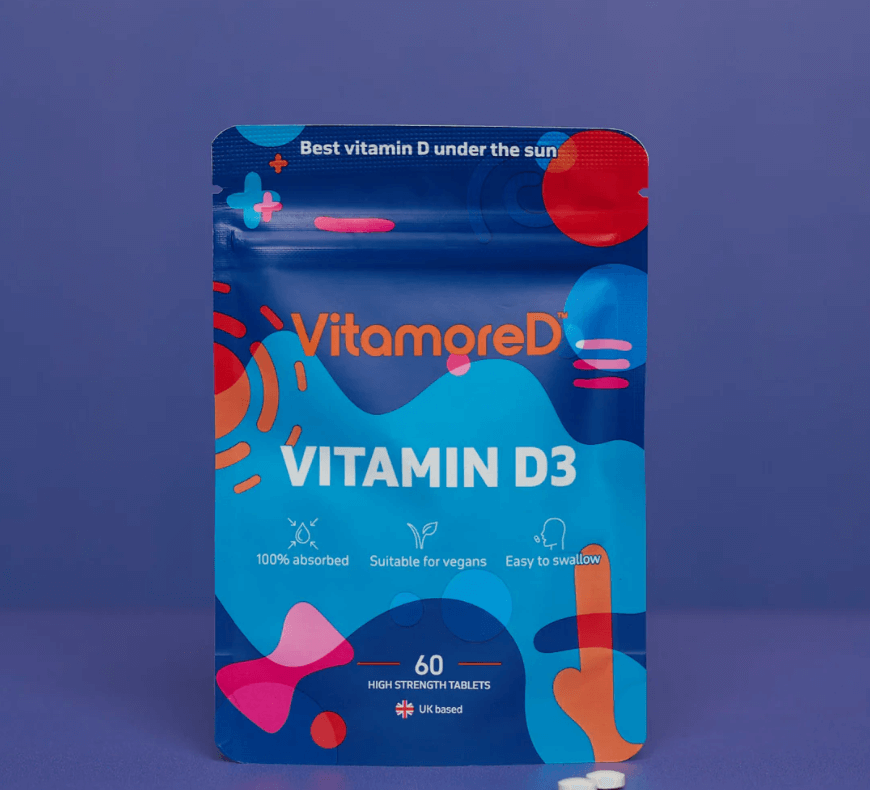
Why I’m Making the Switch
I’ve always tried to prioritise natural sunlight and food sources for nutrients, but Vitamin D is one area where that’s not always practical, especially as I live in the UK.
What I like about Daily’s approach is how transparent and science-driven it is. They’re not just jumping on the wellness trend; they’re simplifying it with products that actually make sense biologically.
As someone who values mindful wellness and sustainability, I appreciate that the brand focuses on quality over quantity, clean formulations, evidence-based ingredients, and a genuine mission to make supplements more effective and easier to understand.
How to Support Your Vitamin D Levels This Winter
Whether or not you try calcifediol, here are a few simple ways to keep your vitamin D levels healthy year-round:
- 🌞 Get natural sunlight whenever possible — aim for 10–15 minutes of midday sun on bare skin a few times a week.
- 🐟 Include vitamin D-rich foods like oily fish, eggs, and fortified plant milks.
- 💊 Consider supplementing — especially between October and March when sunlight is scarce.
- ⚗️ Choose high-quality, bioavailable forms like calcifediol for better absorption and more reliable results.
We all want to feel our best, especially through the darker months. If you’ve ever struggled to maintain healthy Vitamin D levels or just want a smarter, more efficient supplement, calcifediol could be worth exploring.
For anyone looking to make the switch, you can learn more or try it yourself at Daily’s vitamin D supplement, the UK’s first and only calcifediol-based Vitamin D product. If you do decide to give it a go let me know how you get on in the comments below.

Georgina is a sustainability expert, content creator, and founder behind Gypsy Soul. Committed to simplifying eco living, Georgina holds a PgCert in Architecture: Advanced Environmental & Energy Studies. With a wealth of knowledge, she also boasts 13 years of hands-on experience in the sustainability content creation sector, adding depth and expertise to her mission of promoting a greener and more conscious lifestyle. Additionally, Georgina holds a diploma in Vegetarian and Vegan Nutrition, further underlining her commitment to holistic and eco-conscious living.